
The National Magazine of RecordFounded San Francisco 1967 · New York since 1978
Tumbling Pebble
Blackmarket Kittens on a club stage in Detroit
Tumbling Pebble
No. 498November 27, 1986$1.95
  • Stacked Out: the last payday
  • A porch near Monterey, Tenn.
  • Exit Ramp
Blackmarket KittensYou Didn't Find Us

Cover photograph courtesy of Blackmarket Kittens.

No. 498 · Thursday, November 27, 1986 · $1.95

November 1986

Recovered by the archive September 7, 2026.

Contents

Feature

Blackmarket Kittens

You Didn't Find Us

Four women from Detroit have made a record in three days, sold 340 copies of it and become, by any measure you care to apply, one of the best rock bands in the Middle West. They would like it noted that they were here first.
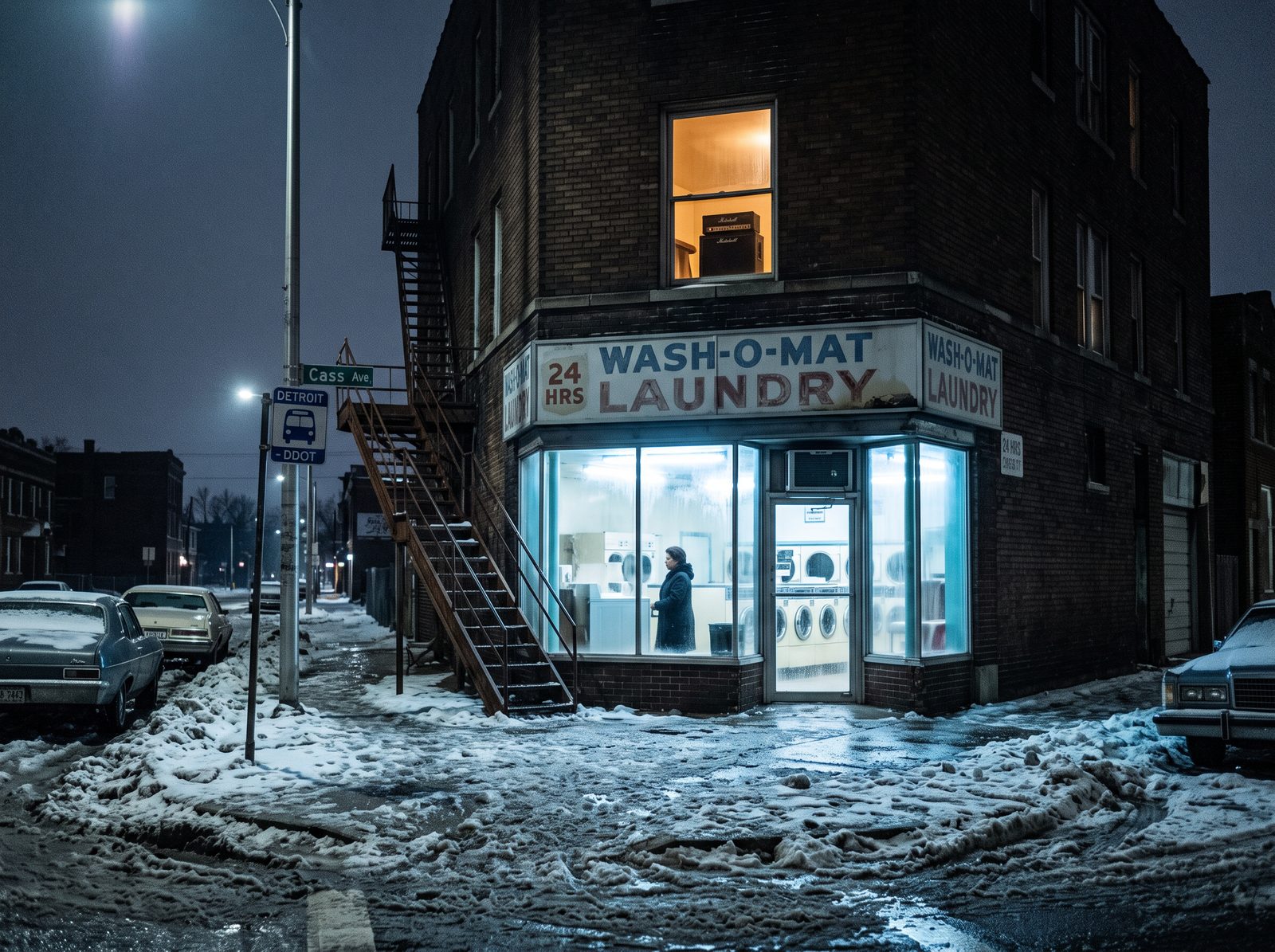
The laundromat on Cass Avenue
Cass Avenue. They rehearsed upstairs. Photograph courtesy of Blackmarket Kittens.

The laundromat on Cass Avenue closes at ten. Upstairs, at a quarter to midnight, the band was still going. The floor shook in time. A dryer that someone had left running downstairs finished its cycle somewhere in the middle of the bridge and nobody heard it.

Blackmarket Kittens are four. Roxanne Delacroix sings, and at the end of a line she is pleased with she leans back from the microphone by about three inches, as if to let it go. Danielle Morel, Dani to everyone, plays lead guitar; just before she plays something especially good she takes a small breath in and shifts her weight, and if you watch for it you will start to see it coming. Suki Park plays bass and is always the last one off the stage. Carla Beaumont plays drums with a ferocity that she does not appear to find remarkable.

They began in 1984 and spent two years playing every room in Detroit that would book them and several that, at first, would not. They were not the first all-female rock band in Detroit, and when we raised the subject they said so, specifically and correctly. Their first release, The Cass Avenue Tape, was five songs recorded in the apartment above the laundromat and sold from a paper bag at shows. One club owner handed a copy back after ninety seconds and said it was a vibe thing. Delacroix tells the story without heat. "It was a vibe thing," she said. "He was right about that."

The Motor Lounge, a bar run by Marie Kowalski, whom everyone calls Mae, gave them a Tuesday. They have had it ever since. It is on the new record, as "Tuesday Night Slot." Before every show Theodore Marchetti, who is large and courteous and whom the band calls Big Teddy, walks the perimeter of the room once, checks every exit, identifies the bartender and takes up a position stage left, where he remains.

The record is You Didn't Find Us, on Backdoor Records. It was made in three days. It has sold 340 copies, twelve of them to the owner of the studio. It is the best guitar record we have heard from the Middle West this year, and the songs are better than the guitar: "One Hundred Forty Nights," "The Room Is Not Right," "Better Than the Headline," and a closing song called "Three People Came," which is about a Thursday, and which is not sad.

Morel is the one the guitar players come to watch. We watched a man in a denim jacket at the Motor Lounge set his drink down on the first bar of her solo in "Blackmarket" and forget it was there. Park's bass lines do something underneath that you will not notice until three years later, when you hear another bass player not doing it.

"You're here," she said. "Stay for the set."

We are aware that a magazine from New York arriving in Detroit to tell people about a Detroit band is, in its way, what the title song is about. We asked Delacroix whether she minded. "You're here," she said. "Stay for the set."

We did. It was forty-five minutes on the bill. It was a little over two hours on the clock. Nobody left.
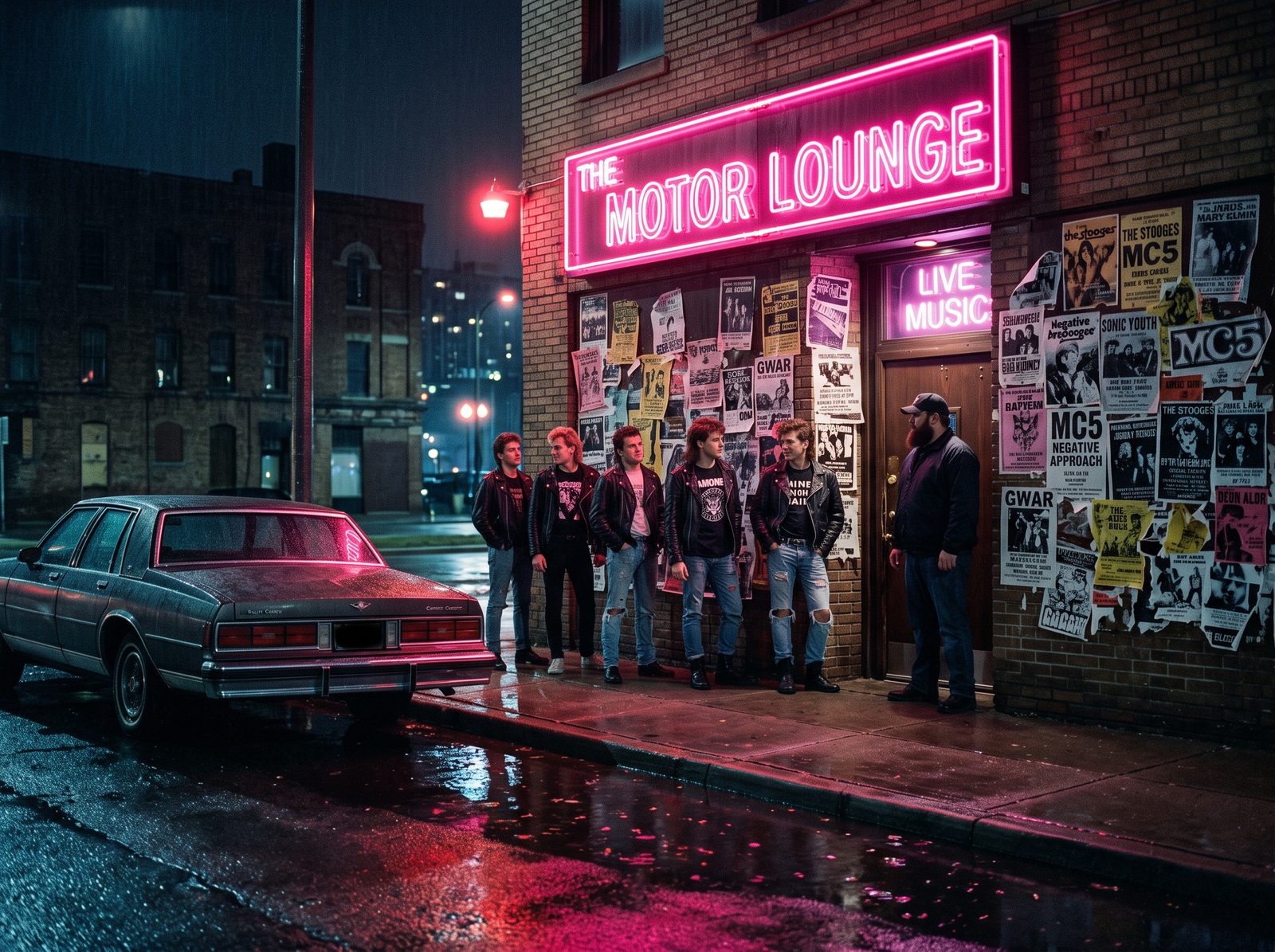
The Motor Lounge, Detroit, at night
The Motor Lounge. Mae gave them a Tuesday. Photograph courtesy of Blackmarket Kittens.

Records

Reviews in this issue. Stars as awarded.

You Didn't Find Us

Blackmarket Kittens · Backdoor · 1986

Recorded in three days, and you would not know it except for the drums, which sound like they were recorded in a room that was a little too small, which they were. Everything else is exactly right. Roxanne Delacroix sings with total command and not a note of pleading. Dani Morel is the most exciting guitarist we have heard this year, and she does not waste a bar. "Open Side Door," "Better Than the Headline" and "The Room Is Not Right" are as good as glam-edged rock and roll gets in 1986. The production is thin. The songs are not. Find it.

Frances Odegaard

Stacked Out

Burning Dead Dinosaurs · Caliche · 1986

Released in April, the month the rigs came down in the Permian Basin, and recorded in a week because, for the first time in five years, nobody in the band had to be at work. It is the Odessa rig-hand band's third and, they tell us, last record, and it is a hard one to listen to if you have been anywhere near the oil patch this year. "Ten Dollar Oil," "Last Payday" and "Rig for Sale" are exactly what they say. "Plug and Abandon" closes it. Rhonda Pike's rhythm guitar has never been faster. A record about the end of something, made by people who were there.

Sam Teague

Basement Diplomacy

Nope Rope from Screwthatistan · Consulate · 1986

Three days, one storage unit in Austin, and the cost of the tape. Side one is a party; side two is the same party, angrier. A funk-punk four-piece with a bassist, Priya Nair, who could hold together a much less disciplined band than this one, and a lead guitarist, Lorraine Vukovich, who appears to have been told about restraint and to have declined. The liner notes give the band's home and decline to give a mailing address. "Give Me the Funk or Give Me Death" is the opener and the thesis. Loud, sweaty and very well played.

Leon Szabo

Exit Ramp

The Shoulder Lane · Hazard Zone · 1986

The Amarillo band's fourth and final record. They have pulled over. Eight songs, the last of them recorded with the engine of Wade Tolliver's final truck idling in the parking lot outside the studio; you can hear it under the last verse, and nobody asked him to switch it off. "Groom, Texas," "Turning In the Logbook" and "Mile Marker 142" are the best songs they have written. Dee Ochoa's steel on "The Lot at Closing" will take you apart. The sign-off is on the record, too. We will not quote it. You know it.

Celia Marchbanks

Show Report

A Porch Near Monterey, Tenn.

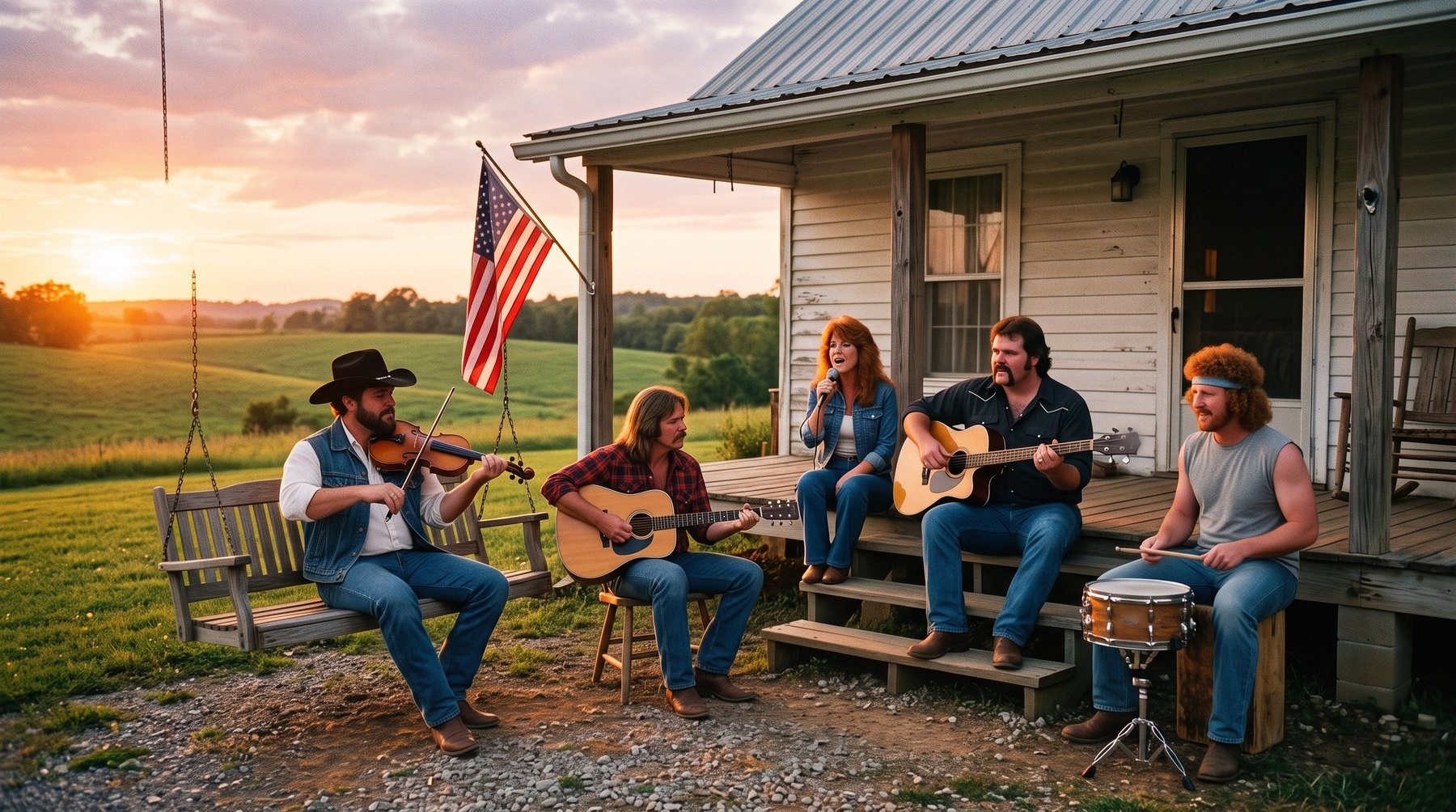
The band playing acoustic instruments on a farmhouse porch at sunset
A porch near Monterey, Tennessee, August 1986, while the coach was repaired. Mr. Lowe asked for the boogie twice. Photograph courtesy of Fiddle & Flag.

On a Saturday in August, Fiddle & Flag's motor coach lost its fan belt on U.S. 70 outside Monterey, Tennessee, on the way to a show. A farmer named Lowe came out with his tractor and pulled the coach into his yard. While bassist Marvin Toles made the repair, the rest of the band sat on Mr. Lowe's porch with their acoustic instruments and played.

The audience was Mr. and Mrs. Lowe, two grandchildren, a neighbor who heard it from the road and a dog. Mr. Lowe asked for the boogie twice. Kay Ashworth, who wrote it, played it twice. Cap Redmond took his hat off for nothing in particular and put it back on. The repair held. The band thanked the Lowes and went on to its date.