The National Magazine of RecordFounded San Francisco 1967 · New York since 1978
Tumbling Pebble
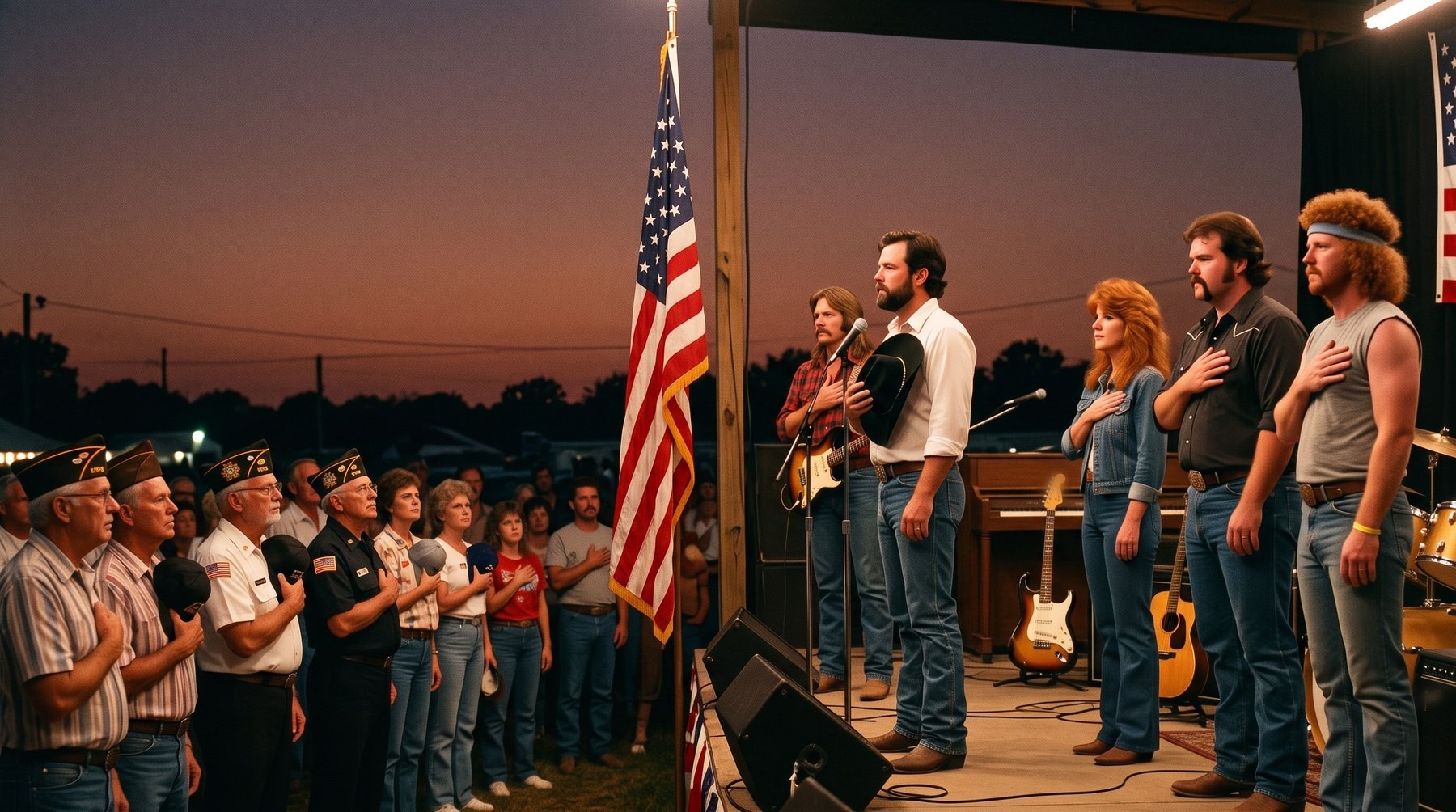
Fiddle & Flag standing with hands over hearts facing the flag before a show
Tumbling Pebble
No. 465August 22, 1985$1.95
  • Live at the Fox, at last
  • One Tree Standing
  • Letters from the radar room
Fiddle & FlagHand on Heart, Bow on String

Cover photograph courtesy of Fiddle & Flag.

No. 465 · Thursday, August 22, 1985 · $1.95

August 1985

Recovered by the archive September 30, 2026.

Contents

Feature

Fiddle & Flag

Hand on Heart, Bow on String

Every county fair in the Upper South books one grandstand act for one night in late summer. More and more of them are booking the same one.
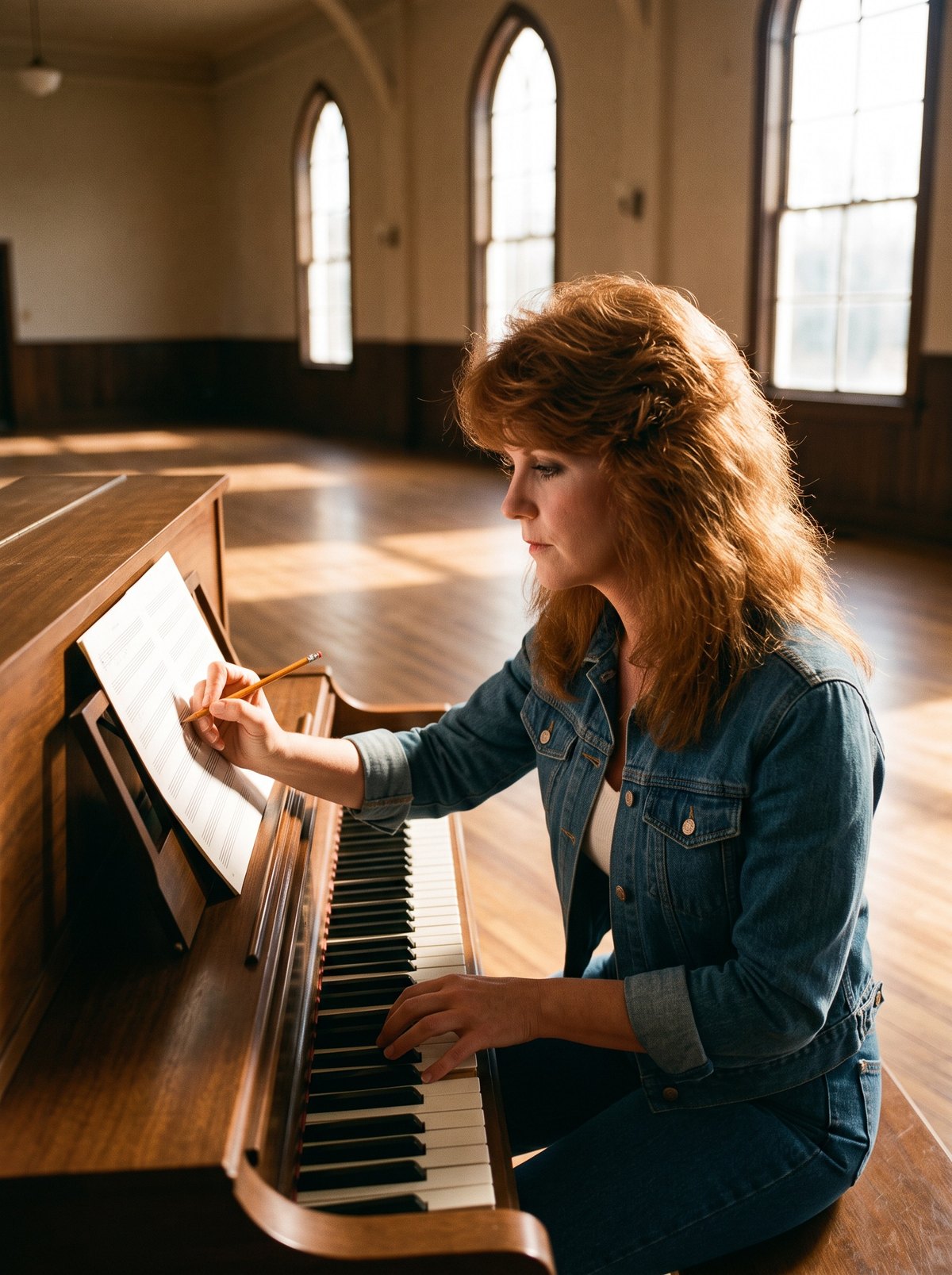
Kay Ashworth at an upright piano writing on manuscript paper with a pencil
Kay Ashworth. Every chart, in pencil. Photograph courtesy of Fiddle & Flag.

At the county fairgrounds in Sparta, Tennessee, the grandstand fills from the top down. By half past seven on a Saturday in August there were people on every bench and children along the rail, and the smell of the livestock barns had given way, mostly, to the smell of funnel cake. On the stage a five-piece band stood in a line, facing the flag.

No instrument is tuned and no note is played until the anthem is over. That is the rule. A girl from the county high school sang it. Clayton Redmond, who leads the band and plays the fiddle, held his black hat over his heart with his right hand. The band stood with the crowd. When the last note had gone out over the infield he put the hat back on, and not before, and the piano started the boogie.

No instrument is tuned and no note is played until the anthem is over.

Fiddle & Flag are from Cookeville, an hour or so up the road. Redmond, whom everyone calls Cap, was born in Putnam County in 1947. He was drafted in 1966 and served three years in the Army, including a year in Vietnam with an engineer construction battalion, and came home a Specialist Five. He works in his father's hardware store on the courthouse square. On Saturday nights he works here.

The boogie that opens every show belongs, note for note, to Kay Ashworth, who plays piano, sings harmony and writes every chart the band plays. She writes them in pencil, on manuscript paper, at her kitchen table in Cookeville, and brings a revised set to every rehearsal. The part of the boogie that everybody assumes Cap is making up as he goes is written down. She carries three sharpened No. 2 pencils in her jacket pocket at every show. We counted.

Eddie Lee Brannon plays lead guitar and answers every fiddle line a hair behind and a little louder. Marvin Toles plays bass, stands stage right, plays root and fifth and has never been late for a downbeat. Rusty Gaines plays drums. He joined in 1980, at nineteen, and wears a blue headband to every show.

Since 1980 the band has played grandstands in Tennessee, Kentucky, Alabama, Georgia, the Carolinas and Missouri, and VFW post halls in between. In 1982 it bought a used motor coach. A small flag rides on the door. It is replaced every year on June 14, and the worn one is taken to the nearest VFW post and retired properly. Since last year Gaines has kept a ledger of the pies given to the band at post halls, by date, post and kind. Chess pie leads.

Two summers ago, on the Fourth of July, rain closed this same grandstand at 7:40 in the evening. The band carried its instruments to the livestock show barn and played the full set unamplified to the two hundred people who followed. A good number of those people were in the grandstand again on Saturday. Several of them told us so before we had asked.

The new record, Seventy North, is named for the highway out of Cookeville. It was written on the coach, arranged at Kay Ashworth's kitchen table and recorded in four days. It has a song called "The Pie Table" and a song called "Kay's Chart," and it ends with "Fiddle Fire," which is how the show ended, too. Afterward a woman from the fair board handed Gaines a pie wrapped in a dish towel. He thanked her, and wrote it down.
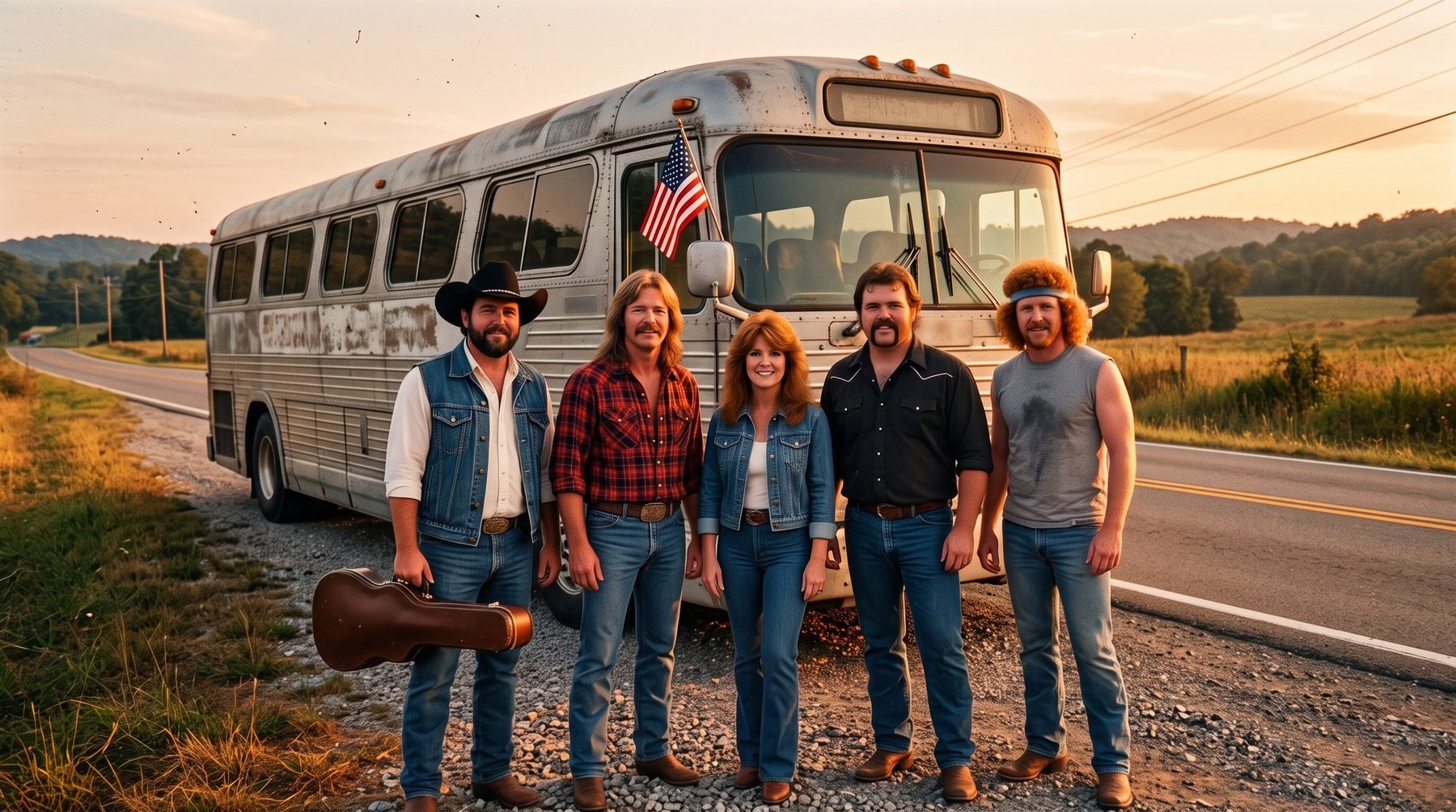
The band in front of a silver motor coach with a small flag on the door
The coach, bought in 1982. The door flag was replaced every Flag Day. Photograph courtesy of Fiddle & Flag.

Records

Reviews in this issue. Stars as awarded.

Seventy North

Fiddle & Flag · Falling Water · 1985

The second record from Cookeville's grandstand band is a road record written by people who are always glad to get home. Kay Ashworth's arrangements are clean as a swept porch; Cap Redmond's fiddle is warmer than on Cumberland Grandstand and his singing more relaxed. "Two-Lane Country" and "Silver Coach" will be stuck in your head by Tuesday. "The New Post Home" and "Mama Kept the Porch Light" are as plain and as moving as anything on country radio this year, and better written than most of it. "Fiddle Fire" closes the record at a tempo that would get the band arrested in some counties.

Frances Odegaard

Second Batch — Live at the Fox

Black Russian Blunt Cake · Mapleton Avenue · 1985

Recorded at the Fox Theatre in Boulder over three nights in January, and the first record to capture what this band is actually for. The first disc gathers the songs. The second is a single unbroken jam of forty-seven minutes that begins with "Kahlúa Morning" and passes through three other songs into country that has no name. The drum duet between Martin Ochoa and Phil Dunaway in "Rolling Pin Blues" should be studied. We have heard longer nights from this band. We have not heard a better record of one.

Joanne Whitcomb

One Tree Standing

The Trees Have Unionized · Old Growth · 1985

The last part of the Missoula trio's forest story, and the quietest. Most of the record is aftermath: "The Managed Wood," "The Canopy Authority," "Subsidiary," even and orderly and dim. Then there is a grove that kept its own counsel, and then one tree. The closing movement is ninety seconds of a single sustained chord and two words. The label printed the lyrics; the band asked it not to; the compromise is a typeface you have to work to read. We worked. We will not tell you the words. We will tell you it is worth the work.

Dwight Ellery

Ask for the Order

Powered by Sheer Righteousness · Stemmons Audio Programs · 1985

A Dallas five-piece that plays sales conventions, and this is its first audio program: one cassette and a twelve-page workbook, sold at the back of the room. Every song runs as long as a walk-on, a coffee break or a lunch line, because it was written to. Denise Haldane, who plays keyboards and directs, times everything to the second, and the band is tighter than most of what we hear from Los Angeles. Gary Lindquist sings "Every No Is Closer to Yes" as though he believes it, and by the end of side two we were not sure we didn't. We did not complete the workbook.

Sam Teague

Letters

Correspondence

Sir: I am an air traffic controller. I will not say where. Your article on Punishment Vectors was accurate. We do not discuss the record at work. Everybody at work owns the record.

— Name withheld, Long Island

Sir: Your reviewer timed Airworthy by Heir Worthiness at sixty-eight minutes. I timed it on the stopwatch I use for engine runs and can confirm the figure. I have since played it eleven times.

— K. V., A&P/IA, Dayton, Ohio