Feature
Punishment Vectors
Every Heading Has a Reason
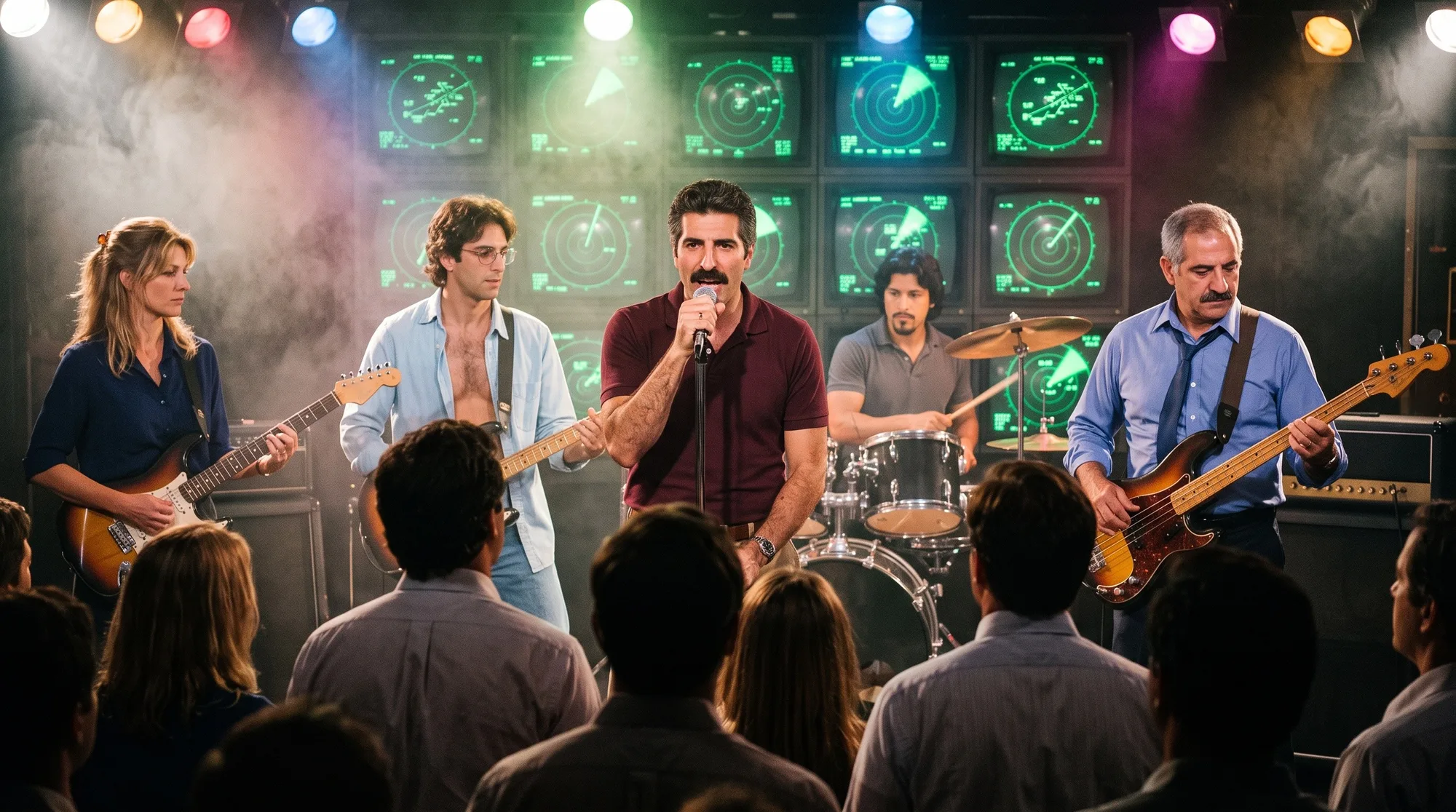
Five air traffic controllers from the radar room in Westbury have made a heavy metal record about their own trade. Half the pressing went to their colleagues. The other half is going fast.
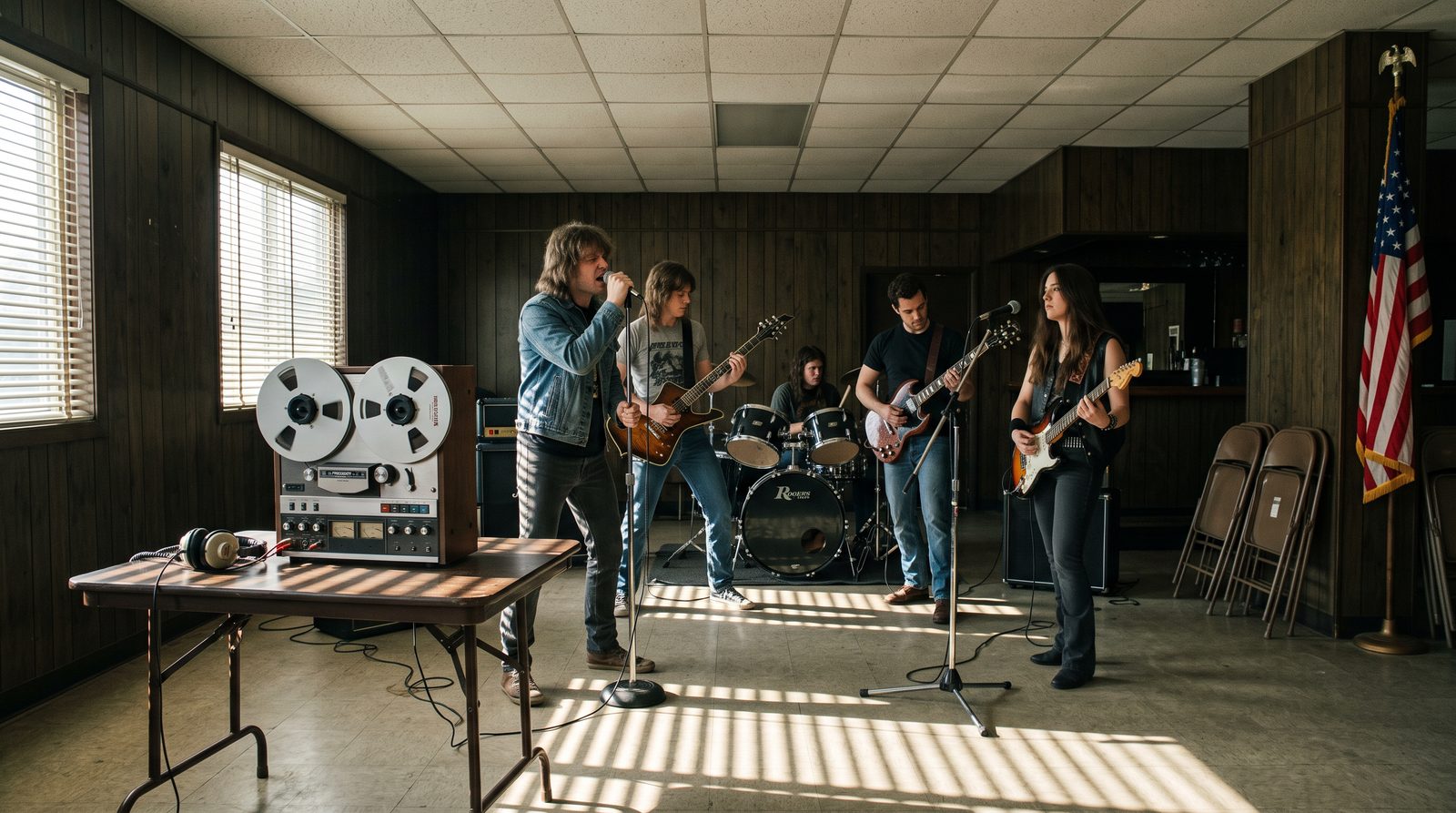
The American Legion hall in Westbury rents for twenty-five dollars a Sunday afternoon. For four Sundays this spring it was rented by a heavy metal band, which set up on the floor between the folding tables, recorded eight songs and swept up afterward. Nobody at the Legion knew what the band did for a living. The band preferred it that way.
What they do is control air traffic at the New York approach control, a windowless radar room a few miles down the road that works the arrivals and departures for Kennedy, LaGuardia and Newark and a good deal of the sky in between. They work rotating shifts. They speak to pilots in short sentences and do not, as a rule, raise their voices. On Sunday afternoons they make an exception. The band is called Punishment Vectors, and its first record, Every Heading Has a Reason, is out on Scope Records.
Frank DeLuca sings. He was in a doo-wop group in high school, and there is still something of it in the way he leans into a chorus. Sal Mucci and Rita Zarnowski play lead guitar, the two of them trading lines with the precision of a handoff between sectors. Tommy Bilotta plays bass. Miguel Fuentes plays drums; he transferred in from the training academy in Oklahoma City at the end of 1982 and was asking everyone in the building whether they knew a drummer for a project, until it turned out the project was this one.
It began in a carpool. DeLuca and Mucci had been driving in together from Astoria for three years before either mentioned that he played. It came up in December 1982, stuck on the Long Island Expressway. By the time they reached the Meadowbrook Parkway exit they had agreed to try a band. Within a week there were five of them.
Every song on the record is written from the controller's chair. "The Half-Eleven Rush" is the late-morning push of arrivals, set at a tempo that will be familiar to anyone who has worked it. "Two-Two-Left" is a runway. "The Read Back" is about the moment a pilot repeats a clearance so the controller can confirm it was heard correctly, and about what it means when it was not. "Sweetheart on the Frequency" is about a pilot. We will say no more about "Sweetheart on the Frequency."
"Every heading," he said, "has a reason."
Side two closes with an eight-minute suite called "Punishment Vectors." There is a story told in airport bars up and down the East Coast about what becomes of a pilot who is rude on the frequency. We asked DeLuca whether it is true. He looked at us for some time. "Every heading," he said, "has a reason." We asked Zarnowski. She snapped a hair clip open and shut, twice, and said nothing at all. We asked Bilotta, who took off his reading glasses, folded them, put them in his shirt pocket and changed the subject to the parkway traffic.
Scope Records pressed a thousand copies. By the band's estimate, controllers bought half of them. The rest are selling at the Long Island metal clubs where the band has been opening for touring acts, and at the bar of the old Marine Air Terminal at LaGuardia, where a stack of them sits by the register. A pilot we know, who flies into LaGuardia twice a week, has bought two copies and asked that we not print his name. We have not.
None of the five intends to leave the job. "Somebody has to work the rush," Bilotta said. Fuentes was already tapping something on the table, in a pattern he said was the opening of a new song. It went three, two, three, two.