The National Magazine of RecordFounded San Francisco 1967 · New York since 1978
Tumbling Pebble
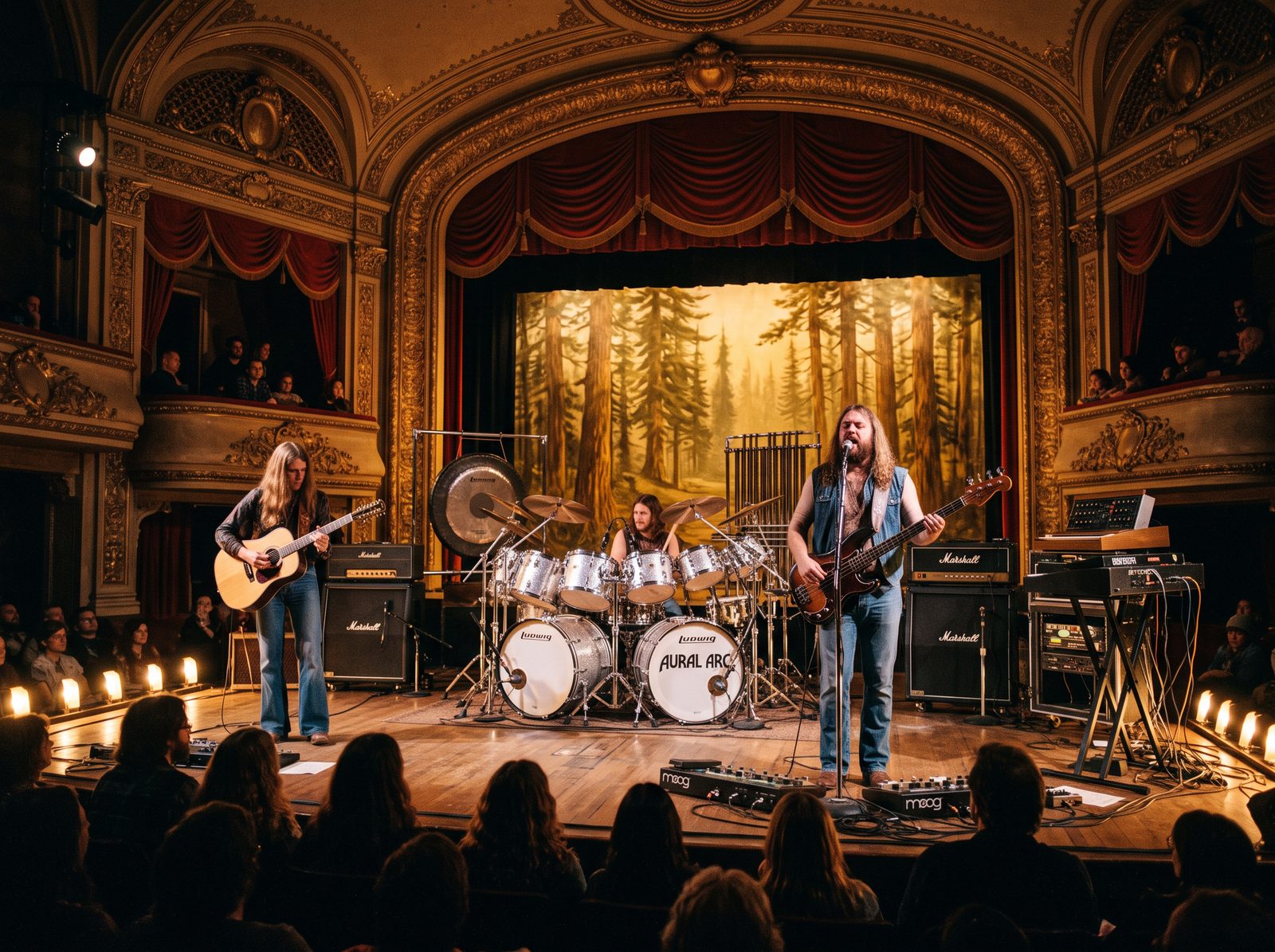
The Trees Have Unionized performing in a small Montana theater
Tumbling Pebble
No. 393November 18, 1982$1.50
  • Burning Dead Dinosaurs: Crew Change
  • Two-minute music from Turlock
  • Letters: the cake, the trucks
The Trees Have UnionizedThe Forest Convenes

Cover photograph courtesy of The Trees Have Unionized.

No. 393 · Thursday, November 18, 1982 · $1.50

November 1982

Recovered by the archive September 17, 2026.

Contents

Feature

The Trees Have Unionized

The Forest Convenes

A Missoula trio has spent four years and two records on a single story about a forest. Side two of the new one is a twenty-two-minute suite scored like a committee meeting. The band will not tell you what it means. Neither will we.
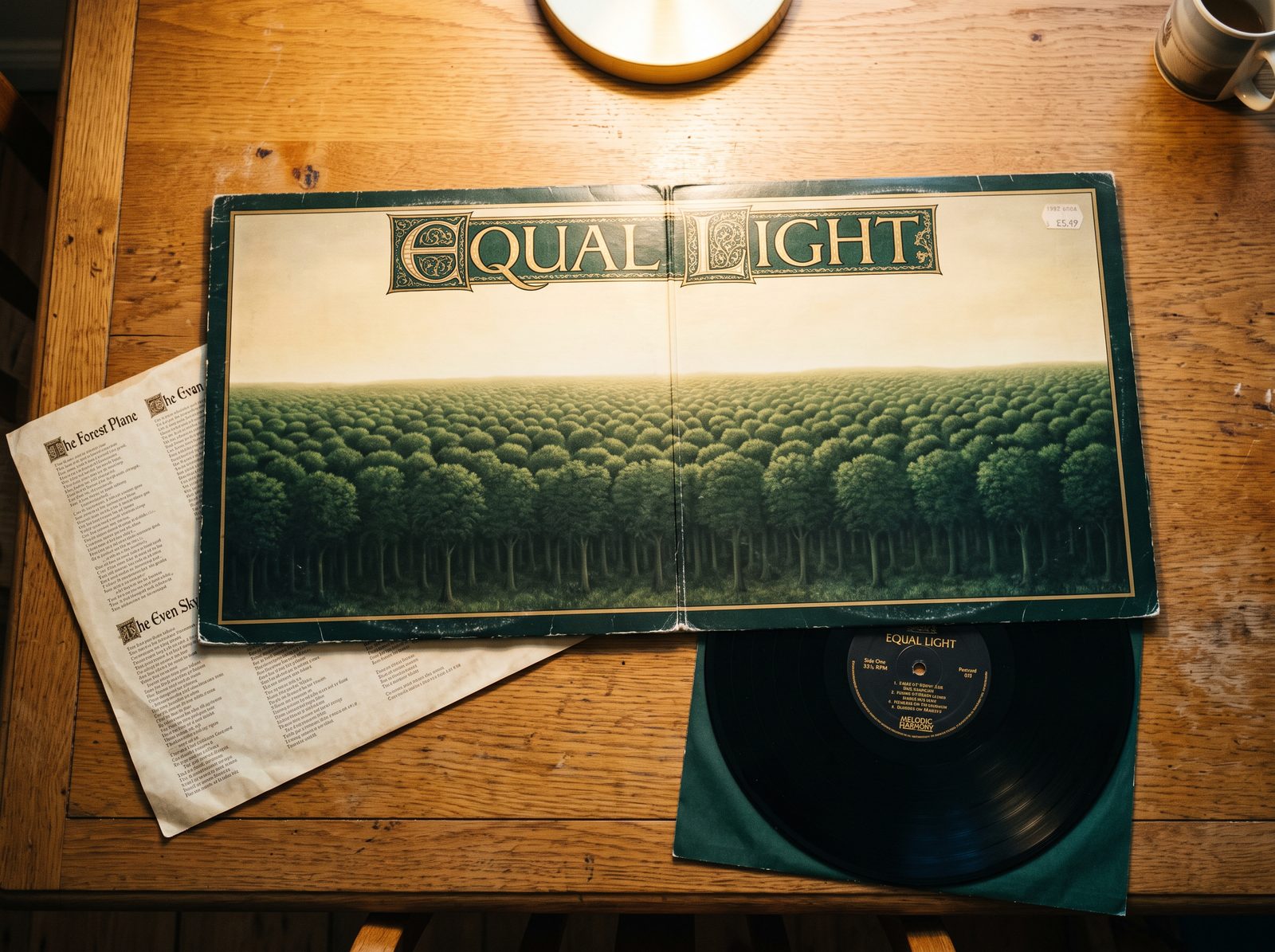
The opened gatefold sleeve of Equal Light with a painted forest
Equal Light, gatefold, 1982. Photograph courtesy of The Trees Have Unionized.

The theater in Missoula holds a few hundred people, and on a Saturday night in October every one of them sat very still for twenty-two minutes. On the stage were three men and a great deal of equipment. They were playing the second side of their new record, Equal Light, all the way through, without stopping and without a word in between.

The band is The Trees Have Unionized. Curtis Reave sings, in a range higher than seems advisable, while playing bass, bass pedals and synthesizer, sometimes all three. Ambrose Teller plays electric, twelve-string and classical guitars in tunings he declines to name. Emerson Roth plays drums and percussion and writes every word. They have been together since 1978 and have recorded two albums for Old Growth Records, and if you live east of the Continental Divide you have very likely not heard either one.

The story of the band, as the band tells it, which is seldom, begins on its third night together. Roth set roughly forty handwritten pages on the table and said it was an album: a concept record, in three parts, about a forest. Reave read it twice. Teller read it once and said he could already hear it. The Wild Wood, in 1980, was the first part: the forest as it was, every tree reaching at its own pace for its own patch of light. Equal Light is the second. A third is promised and has not been scheduled.

On Equal Light the forest convenes. It votes. The canopy is to be shared and the light made equal, and the band insists, in the music, that the warmth of this is real. The first side lingers in it generously. Then the record turns. The second side is scored as procedure, not villainy: a vote, minuted and carried, and the work that follows. It is called "Hatchet, Axe, and Saw," among other things. No one in it is wicked. It is the tensest music we have heard this year, and nobody raises his voice.

"Saying it," Roth said, "would make it smaller."

We have heard it said that the record is about something other than trees. We put this to Roth after the show, in a hallway behind the stage, while Teller re-strung a twelve-string with great care and Reave sat on an equipment case with a cup of tea. Roth thought about it for longer than was comfortable. "Saying it," he said, "would make it smaller." Then he went to help with the cases.

Onstage they do not talk between movements. Reave sings with his eyes closed and his feet working the pedals as though he is walking somewhere a long way off. Teller changes guitars without looking, between bars. Roth plays very precisely and very hard and looks, most of the time, as though he is listening to something in the next room. When "The Understory" ended, nobody applauded for several seconds. Then everybody did, for a long time, and the band stood there and let them, and did not play an encore.

Last year the band played twelve dates, eleven in Montana and one in Idaho, every one of them loaded in through a side door. This year it played fewer and better. Old Growth Records has pressed more copies of Equal Light than of the first record, and they are going. It is our view that people outside Montana should hear it. It is the band's view, as far as we can tell, that people outside Montana are welcome to.

Records

Reviews in this issue. Stars as awarded.

Equal Light

The Trees Have Unionized · Old Growth · 1982

The center of a three-part story and the more remarkable for being so plainly the middle of something. Side one, "The Convening" through "Your Neighbor's Sun," is warm and generous and very beautiful. Side two is a single twenty-two-minute suite that moves with the slow certainty of a meeting where the outcome was decided before anyone sat down. Curtis Reave's voice carries it; Ambrose Teller's twelve-string threads it; Emerson Roth's drums keep the minutes. The band has declined every request to explain the record. Having heard it six times, we understand why, and decline as well. One of the year's essential records.

Frances Odegaard

Crew Change

Burning Dead Dinosaurs · Caliche · 1982

Five rig hands from Odessa and Midland who play hard rock on their days off and recorded this debut over two sets of them, between hitches. The title song was written in a pickup at the gate at midnight, waiting for the next tour to come out, and it sounds like it: tired, wide awake and loud. Rhonda Pike's rhythm guitar is the engine, and it does not idle. Jesse Ruelas plays the leads like he is paid by the foot. "Make Hole," "Ninety Feet Up" and "Caliche Road" are the ones the payday crowd in Odessa already knows. The rest of the country should catch up.

Sam Teague

Turlock Runs Sideways

Cracked Out Squirrel · Overload Tapes · 1982

Ten songs in twenty-two minutes from a hardcore four-piece out of Turlock, California, recorded in two days in Modesto on a four-track that was, the band says, already broken when they arrived. The engineer left after the first afternoon. The band finished without him. Nothing on the record holds a tempo for longer than a verse, and nothing repeats a section on purpose. Wanda Pesce's guitar is a sustained act of will. It is not for everyone. It is not trying to be. "Sixteen Songs (Then Nothing)" is the best title we have seen this year and the song is not far behind.

Leon Szabo

Applied Alternation

Alternate Squirrel · Skittish · 1982

The debut from a new wave four-piece in Lawrence, Kansas, with a stipulation we have not encountered before: no two pressings are to be identical. The band had the master re-cut between runs so the record would not repeat itself. We obtained two copies. They are different. Both are good. Roni Klepp's vocals are cool and slightly ahead of the beat; Kip Hessler's synthesizer and tape work flicker in and out like a bad connection, on purpose. "Nervous System" is the single, if there is one. We cannot promise you will hear the version we heard.

Ruth Abernathy

Letters

Correspondence

Sir: Your correspondent wrote last summer of three hours in a Boulder kitchen and reported that the cake was gone by the second set. It was gone by the middle of the first. I was there. I had two pieces. I regret neither.

— D. Harlan, Lyons, Colo.

Our correspondent stands by her notes, which are timed. — Ed.

Sir: Three years ago you wrote about The Shoulder Lane and reported thirty-eight rigs in the east lot at Amarillo. Mine was one of them. I have seen the band nine times since. I have never once clapped.

— R. T., Groom, Tex.