Feature
Black Russian Blunt Cake
Three Hours in a Boulder Kitchen
Black Russian Blunt Cake play long, sell cake by the slice and have a second record out this month. A Sunday on Mapleton Avenue with the most patient band in Colorado.
Three hours in a Boulder kitchen. Nobody left. The cake was gone by the second set.
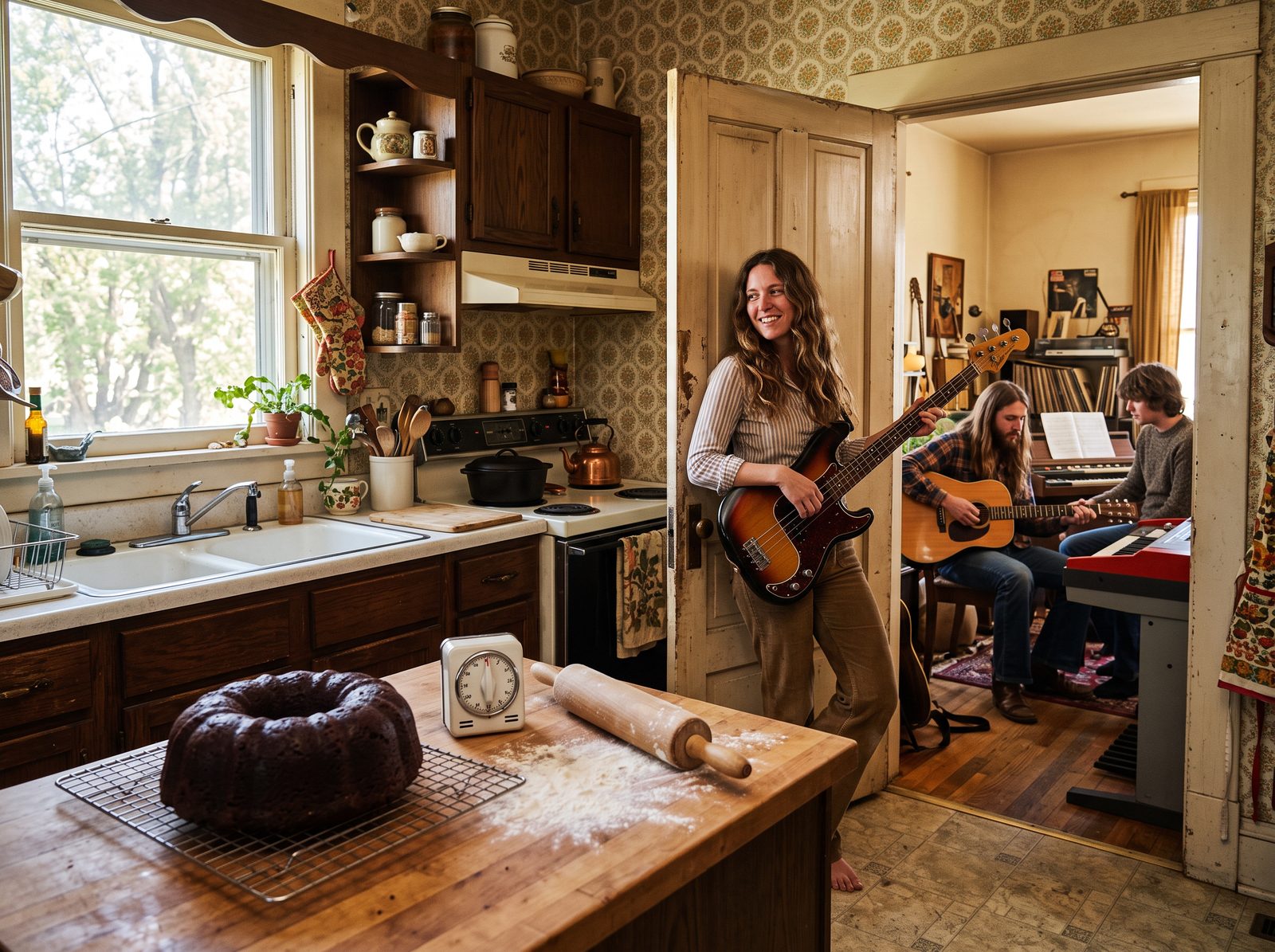
That is the report, and for a day or two I thought it might be the whole of it. The kitchen belongs to Dale and Connie Kemper and sits at the back of a frame house on Mapleton Avenue, a few blocks from where the foothills stop being scenery and start being weather. On a Sunday afternoon in May it held six musicians, a Hammond organ that had come in through the back door in two pieces, a folding table, twenty-two guests by my count, and one bundt cake. The band is Black Russian Blunt Cake. It has made one record, First Proof, on its own Mapleton Avenue label, and has a second, Working the Kitchen, out this month. It does not often play outside Boulder County. You will be hearing about it.
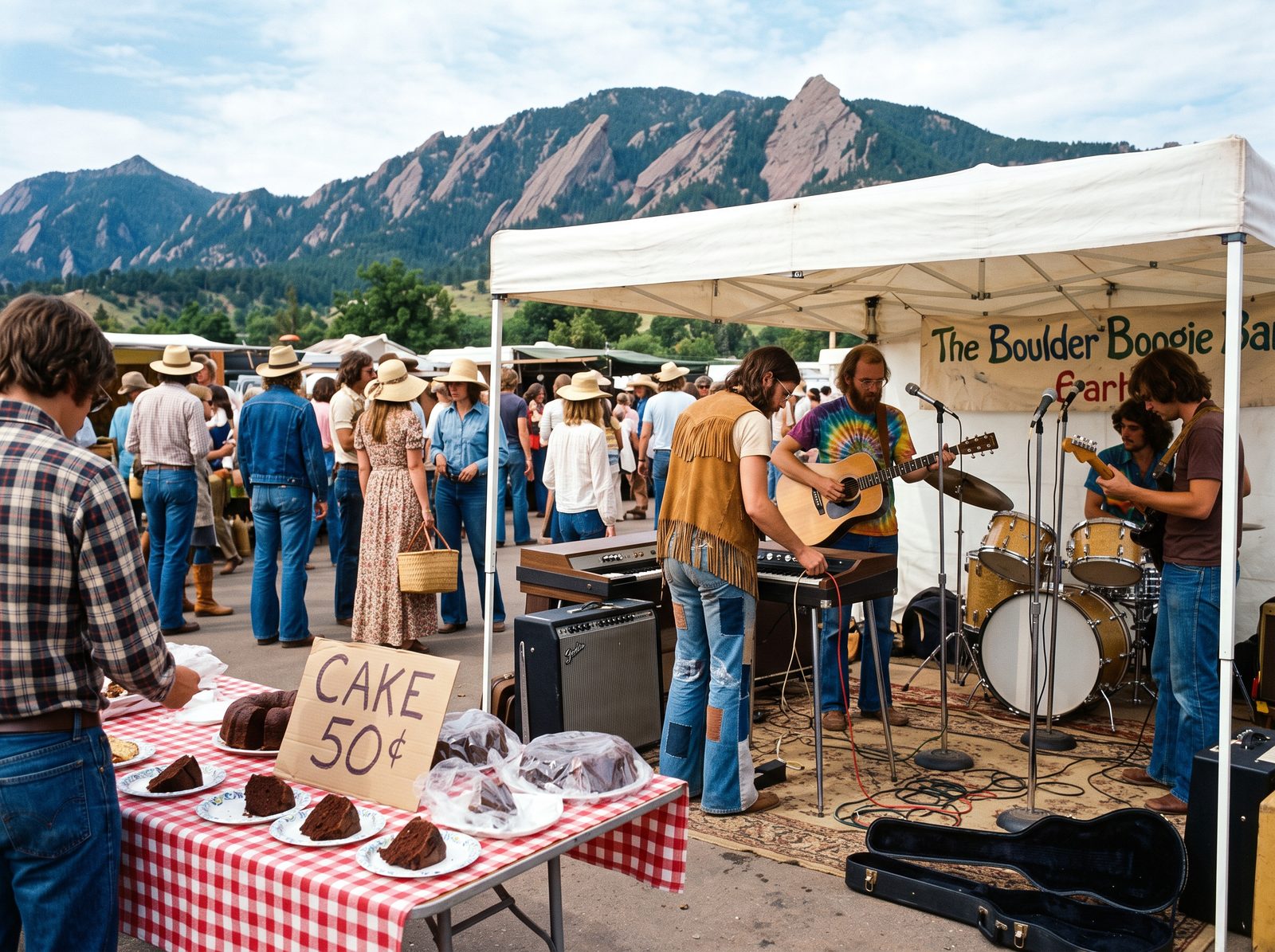
The cake is Dale Kemper's. In the spring of 1978 he baked one in this kitchen for a neighborhood potluck while the band played in the next room, and when the oven timer went off nobody stopped. The cake came out eleven minutes late. He says it was the best one he ever made. He has been making it ever since, and Connie Kemper sells it at the shows from a folding table, fifty cents a slice. The recipe is not written down. "It's a feel thing," Dale said, which is also how he describes the set list.
Dale plays lead guitar and sings. Connie plays bass, keeps the set list in her head and the spare strings in the bass case, and is the only person in the house who knows what time it is. Arlo Pettigrew plays rhythm guitar and lets his picking hand hover over the strings for a full beat before each chord, as though waiting to be told where to go. Teddy Rusk plays the organ through a rotating speaker cabinet, which he will explain to you at length if you ask, and I asked. There are two drummers, Martin Ochoa and Phil Dunaway. They count the band in with four taps of the sticks and say "patience" on the fourth.
Three hours in a Boulder kitchen. Nobody left. The cake was gone by the second set.
The first set began a little after two. By my notes it consisted of four songs and lasted an hour and thirty-five minutes. "Slow Rise," which opens the new record and runs eleven minutes there, ran twenty-six here. Nobody in the kitchen appeared to find this long. A woman by the refrigerator closed her eyes for most of it. A boy of about six sat under the folding table with a slice of cake and did not come out.
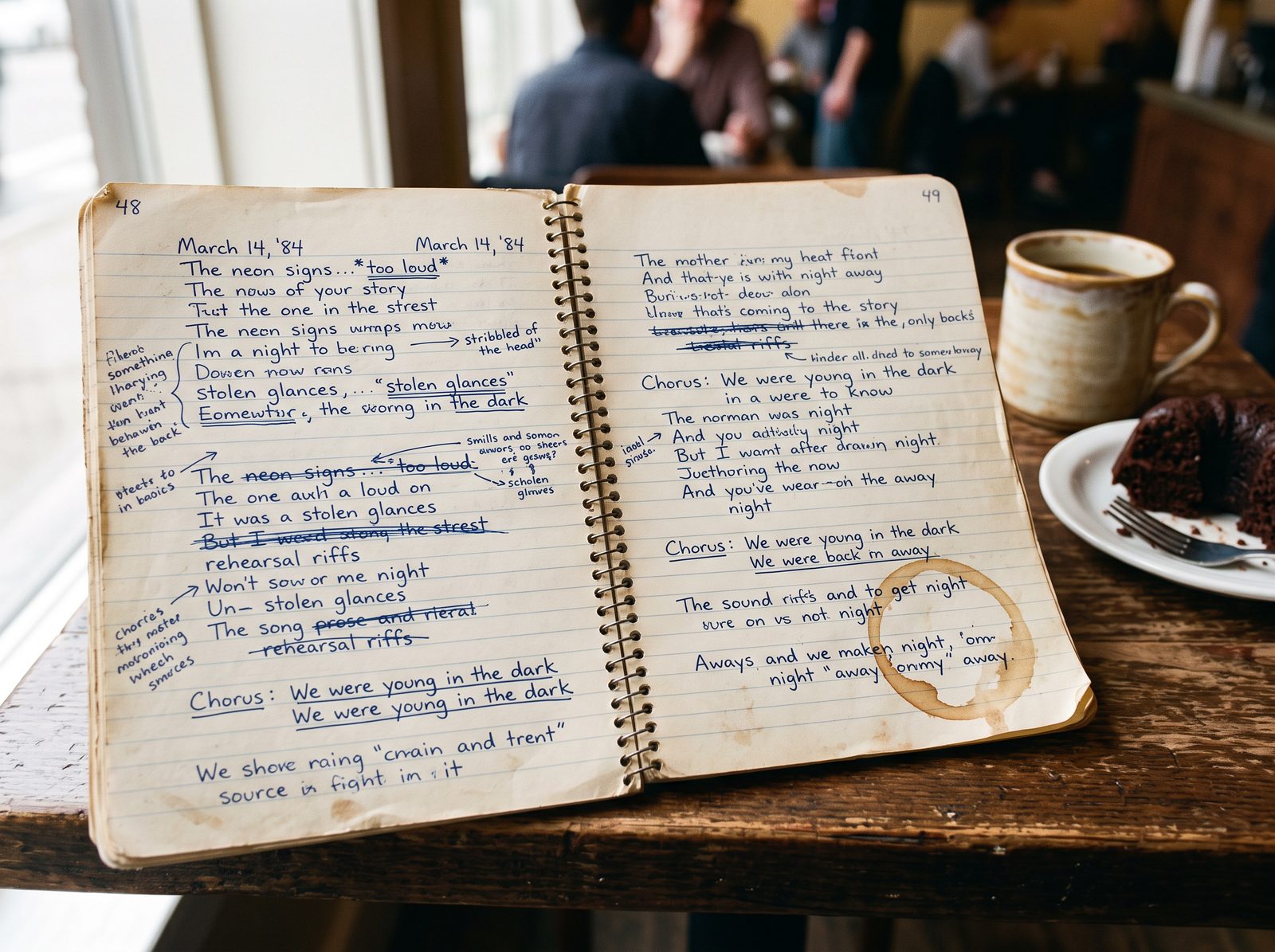
There is a seventh member, who does not play. Wren Holloway writes the words in spiral notebooks at whatever table is nearest the cake, and she wrote through both sets without, as far as I could tell, looking up. When I asked Dale Kemper how the songs get written, he said he has never asked for one. "They arrive," he said. "Like a good proof." Then he went to check the oven, although nothing was in it.
Between sets the room ate. Connie Kemper cut the cake into sixteen pieces, and sixteen was not enough. By the time Martin Ochoa counted off the second set the plate on the folding table held crumbs and a knife. The second set ran a little under ninety minutes and was, if anything, slower, and better. Teddy Rusk took a long organ solo in "Sugar and Time" and let it recede rather than end, fading the sound back over the last two bars until the room realized it was over.
Every show, I am told, ends the same way. Dale Kemper sets his guitar down gently, walks to the folding table and cuts the last slice for whoever is standing closest. There was no cake left. Connie Kemper went to the pantry without a word and came back with a second one, which she had baked that morning for exactly this reason. Dale cut the slice and handed it to the boy under the table, who accepted it.
Working the Kitchen is quieter than the show. The acoustic guitars are forward, the harmonies are close, and the songs are about patience and process: "Rolling Pin Blues," "Farmers Market Saturday," "The Wrapper's Notebook," which is Wren Holloway's, though she does not sing it. It is a good record. It is not the kitchen.
I left at a quarter past five. From the porch I could still hear the organ. A man on the sidewalk asked whether it was over. I told him I did not think so.